Showing posts with label Creating Characters. Show all posts

Thursday, September 27, 2012

Books & Writing -- Creating Characters


We've spent several weeks on the topic of creating characters readers believe in and care about. Today some final thoughts.

Character's Voice
Listen to the voices of your characters. Every character’s voice needs to be distinctive. You don't want them all to sound the same. If you’re not careful they may sound like you. People have various ways of filtering the world’s input—some are auditory, others visual, or kinesthetic. These differences affect how a character perceives their surroundings and how they speak. 

What is voice?
• It’s what a character says and how they say it.
• It’s what they talk about, their interests and who they are.

Characters are the story.
If you give your characters freedom, they’ll write your story. The movie As Good as it Gets with Jack Nicholson and Helen Hunt is a great example of a character driven story. Jack Nicholson plays the role of an obsessive/compulsive author. His neighbor Greg Kinnear is an ultra sensitive homosexual who drives Jack Nicholson's character crazy. The love interest is Helen Hunt. Her character helps put Jack Nicholson’s character back together. These characters drive the story. If you want to study a well done character driven story this is worth every minute of your time.

As a writer, I love it when characters take over and carry me along for the ride.

You want to:
• Listen to your characters.
• Feel how the characters feel. Interview them if you must.
• Look at your characters from another character’s point of view.
• Be sensitive to a character's feelings.
• Don’t hold characters in a vise. Let them breathe, grow and run with their own stories.

Remember:
You want your characters to change and to grow as the story moves along. After all, what fun is it to read a book where nothing happens to the characters on the inside? They've got to discover something or someone, grow, give up, accept . . . in their gut they've got to change.

Dialogue is part of your character.

What does dialogue accomplish?
  • Dialogue needs a reason to be on the page. You don’t want to simply fill up space.
  • It advances the plot action.
  • It pushes a viewpoint character forward to solve a problem or a wrong decision.
  • Makes characters real.
  • Reveals who your character is on the surface and on the inside. It should reveal basics of class, education and personality.

 Examples of two very different characters:

“I shall have a cup of tea, black, and a small salad. No tomatoes, as tomatoes upset my digestion.”

“Gimme pie and coffee, sweetie. Got any apple?”

It's amazing how much you can know about a character simply by what they say and how they say it.

  • Through dialogue you discover facts by the questions asked and answers given.
  • Dialogue sets a mood and reflects the character's mood.
  • It intensifies the conflict. Readers love the give and take between two characters who verbally punch and counter punch.
  • Dialogue conveys information to readers and helps a writer avoid long passages of narrative.
  • Dialogue brings immediacy to the story so readers feel like they are part of the action.
  • It provides a change of pace and can move a story ahead more quickly.
  • It should create suspense or tension.
  • You can use it to tie up loose ends.


Dialogue is more than just a conversation.

  • Combine dialogue with movements and gestures to create pacing.
  • Interject thoughts. Hidden responses often reveal more about a person than what they might have said.
  • Good dialogue is artificially concise. It's a balancing act, concise but not so concise that it sounds unnatural. READ DIALOGUE ALOUD SO YOU CAN HEAR IT.
  • Good dialogue is emotional. You want the choice of words to engage readers and convey emotion.
  • Bare dialogue speeds up a scene and adds tension. Bare dialogue is speaking only, without tags or pacing. There is no narrative. It is used for a brief exchange. Capture the character's speech patterns so readers will know who is speaking.

Common Mistakes Using Dialogue:
  • Using too many direct connections, such as names to identify the speaker or using tags such as he said or she said. Leave these off whenever possible.
  • Describing dialogue--examples--he said angrily. He extrapolated. Rather use a character's actions to convey the mood or the pacing of the dialogue, "I said stop. Stop now!" We know how this character feels without describing it. If he's really mad you might want to add an action to he says, such as, he brought his fist down on the desk.
  • Use of unnecessary dialogue. Remember that dialogue should move the action forward. Don't write it down if you don't need it.

Helps for learning realistic dialogue.
  • Listen to the way people talk. You can sit in a restaurant or bus station, or any place where people gather, and observe and take notes.
  • Listen for emotions. What do people sound like when they're angry, bitter, content, cynical or . . .
  • Read and study lots of dialogue.

 Quote by Dwight V. Swain.
“Always strive for the provocative line. Hunt for at least occasional new, fresh, original ways for your characters to say whatever it is they have to say. In their proper places, slang, colorful analogies, personification, and the like can prove very effective.

How do you find the provocative line? Write whatever dull cliches come handy, then go back and rework. Complex may then become as tangled up as a meatball in a can of spaghetti. Jumpy is reworked to jerking like a crawdad on a hook or wriggling like a barefoot boy on hot cement”.


I hope these sessions on creating characters have been helpful. It's time for you create the people who will tell  your next story. Have fun!

Grace and peace to you from God,

Bonnie


Wednesday, September 19, 2012

Books & Writing -- Creating Characters


I've been absent from my blog recently, but I promise we'll soon complete this series on creating characters. Today, I'd like to look at a tool that we can go back to again and again while creating and working with our characters. This will help define a character and remain true to who they are.

Archetypal Roles
An archetypal role is simply a model of a character (it can also be used to help define a story). If you begin with an archetypal role, constructing a character or even a story plot will be easier.

I've listed some examples below. There are many more. You may want to create your own list. For instance if you find a character in a movie you're watching or book you're reading and you think that character might be someone you'd like to use in a story add them to your list. I found one just the other night and she was so perfect for my next book that I changed the one I'd previously chosen. You may want to watch the movie several times to help you pin down the character.

Examples

• Cinderella—The movie Pretty Woman follows this archetypal role for the Cinderella story, right down to the white limousine at the end. Julia Roberts creates a perfectly spunky Cinderella in this rags to riches story.

• Coming of Age. Luke Skywalker is a good example of this type of character. 

•Hero Quest—Jesus Christ is the most famous archetypal role for this type of character. He is the savior, who gives his life for others. A more recent and creative version is the hero in the movie the Matrix. He is THE ONE who came to save mankind.

• Come to Realize—This is most clearly seen in the prodigal son. In the Biblical account the young man leaves home and quickly spends his inheritance on wine, women, and easy living and then seeing the error of his way returns home to the open arms of his father. There are lots of creative ways to use this type of character.

• Romance—There are a number of architypal roles—tragic love (Romeo and Juliet), forbidden love (The Thornbirds and a more recent example is Avatar). Unattainable love is poignantly demonstrated in the movie (Anna and the King of Siam, written by Margaret Landon).

• Monster slayer—The hero or the heroine is in peril and the monster slayer destroys the enemy. (James Bond). Another type of monster slayer is portrayed in a movie called Extraordinary Measures where the father of two very sick little girls fights the system to save his daughters' lives.

• Fugitive—This is the character who is unjustly accused. In the 1960’s
there was a television program called “The Fugitive. Harrison Ford played the character in a more recent movie taken from the weekly TV show. The character and the tale was based on a true story, about an innocent man running from the law.

• Beauty and the Beast—This is the story of a repulsive character who is transformed or redeemed by love (The sin eater in The Last Sin Eater)

I hope these will be helpful as you continue to romp through your story. Remember, have fun.

Grace and peace to you from God,

Bonnie


Friday, August 10, 2012

Books & Writing: Creating Characters


Before I plunge into the next step of creating characters I need to crow a bit. 

Joy Takes Flight received a starred review from Libary Journal. Woo Hoo!


Okay. Got that out of my system.  : )  Now on to creating characters. By this time you probably have a pretty good idea of who your characters are so creating tags for them should be fun.


External tags.
Tags are characteristics that distinguish one person from another. They will help readers recognize the characters. They can be positive or negative. 

You definitely need these for your primary characters. The more deeply involved a character is in the telling of your story the more important are the tags. Those who come on stage and then leave . . . well only you can decide if they need a tag.

Types of tags

• Name
A name can be descriptive. In Steinbeck'sbook, The Wayward Bus there is a character called Pimples. It provides a good picture of a teen boy. We immediately get a visual when the name is used. 

Just a word about names. Be careful to use names that fit the time period and the place where your story unfolds.

• Action/body movement. 
People don't hold still. They do things like drum their finger tips on a table or crack their knuckles, twirl their hair or chew their fingernails. Think about who your character is and make their little idiosyncrasies appropriate to the individual.

• Speech/inflection.  
A person’s tone of voice, or the way they deliver their words should be distinctive. They may speak with a drawl or toss out words like rapid fire. Or speak without thought and always seem to say the wrong thing. My mother hums. Everyone knows she does it. One time she was in a public restroom at an antique show and went in to use the restroom. Another seller who knew her well walked into the restroom and my mother was humming while sitting on the toilet. The newcomer said, "Hi Elsa." She didn't need to see my mother to know it was her.  : )

• Background.
A character's occupation can be a tag. Make sure it works with the plot of
your book. 
You also want to consider a person’s age, education, religious background, and
where they were raised. Again, make sure the background fits in with the plot.

• Sensory.
The way a character looks or smells would be sensory. An example would be a man who wears a spicy, heavy cologne that arrives before he does. You'll always know who he is even before he comes on scene. Using my mother as an example once more--she wears White Shoulders perfume and if I were designing a character after her that character would use White Shoulders. You can know who the character is simply by this type of identifier. 

• Mental. 
The way a character thinks can be a tag. It can be demonstrated through dialogue or the things they do or the way they react to circumstances. An example that comes to mind is my own home town. When my husband and I moved here more than thirty years ago, there were to primary groups of people--rednecks and hippies. There was a distinctive difference in the way they spoke and what they talked about. What they did for fun. How they dressed. Their views on life. Just close your eyes and picture the two types of people standing side by side--the differences are stark. A caution here, however. When using something like this be careful not to become cliched in a character's development. Be creative.

If you do a good job of using tags a reader should be able to identify who is speaking without you, the writer, having to tell them who it is.

Have fun!


Thursday, August 02, 2012

Books & Writing -- Creating Characters


I've taken several weeks hiatus from our subject of creating characters and it's time to get back to work on the people who live through the joys and heartaches we throw at them in our stories. We've got work to do. 


I encourage you to take lots of time when you're creating your characters. Remember, if they aren't real to you they won't be real to your readers. If readers don't care about the people in your story you'll lose them. They'll set your book down and not pick it up again.

I really liked this from Myers-Briggs. "All I have to do is ask the four key questions (intro or extro? Intuiter or Sensor? Thinker or Feeler? Piler or Filer?) Immediately personalities jump into my head.As we work through the creative process keep these basic traits in mind.


Because I've been away for a while how about a reminder of what we've talked about so far. You can refer to earlier blogs for more details.
  •       Create real characters.
  •      The Basics -- What do they look like?
  •      Beyond Basics -- Who are they?
  •      Creed -- What is their system of belief?  
The next step is . . .

Personality Type


It definitely helps to consider  personality types. Myers-Briggs have a great start with their questions, but I need to find out more and so when I'm developing the people who tell my stories the questions continue. Characters grow and become more complex.


It's important to be thorough in your development and then record what you find or it's possible a character could become someone they weren't meant to be. It can be a challenge to remain true to a personality type. That's why I create detailed character outlines. Frequently ask yourself, “Would this character react this way? Or would they do this or say that?  Why or why not?"


Personality examples: 

  • Withdrawn 
  • Gregarious 
  • Mystical 
  • Powerful 
  • Fragile 
  • A complainer 
  • Argumentative 
  • Dreamer 
  • Practical-Get down to business type 
  • Creative
  • Impulsive


     These are just a few ideas to get you started. I bet you can come up with a lot more. If you think of something add it to the comments at the bottom of the page. Let's see how many we dream up. Remember, for today, we're focusing on personalities. We'll get into some of the other details in the weeks to come.


Grace and peace to you from God. And happy writing!


Bonnie

Thursday, June 21, 2012

Books & Writing: Creating Characters


Lets take a look at another quality we need to consider when creating characters that jump off the page and become real to us and to our readers.

Create a Creed
Every one of us has a creed, a system of belief. Think about what you feel passionate about, what pushes your buttons or makes you stand up and speak up or what motivates you to action.

Some examples:

• Is your character a Conservative or Liberal? In today's world that makes a big difference in what they believe and how they react to the world around them. Make sure to keep the time period in mind when considering this--it can make a big difference.

• Is the character religious or not? Do they hate even a hint of religion or do they embrace it to the point of being irritating? What is their religious background--that will make a difference in how they view religion and Christianity.

• Is family important to them? If not, why not? 

• Are they a go-for-the-gusto type person? Do they have a bucket list? And are they actively persung that list? Consider what motivates them to live this way. Or are they the opposite--afraid to live? Again, you've got to ask yourself, why.

• Do they believe in getting the other guy before the other guy gets them? What happened in their past to make them so cynical? Or maybe it's just a way of life they've learned from someone they grew up with. 

• Do they trust no one, or do they trust everyone?

 • Do they believe all life has to offer is what you make of it or what you take from it? Or maybe they are a Mother Theresa, who sacrificed everything for service.


There are a lot of different creeds. Look around at the people you know and you'll see the variety. Or you might try watching a movie and write down one's that appeal to you.

REMEMBER . . . when you bring these people into your story they should blend in with the tale, become part of it. Don't just drop them in because they're interesting. They must contribute.

I'd love to hear from you. Are you creating a character or group of characters for a new story? Have the past three topics about creating a character been helpful? I'd love to hear your descriptions thus far. And creeds are so much fun. What kind of person have you come up with?

YOU GET TO CREATE THIS PERSON, WHICH MEANS YOU CAN DO WHATEVER YOU LIKE. FUN, HUH! 

Grace and peace to you from God,

Bonnie 


Wednesday, June 06, 2012

Books & Writing


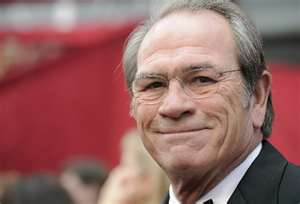
Last Wednesday, we took a small step toward creating memorable characters. This week--one more step. But before we begin, did you come up with any ideas about the character I showed you, about who he is? His name is Tom in the book I'm working on. This week I have a new character. I'd love to know what you think about her.


Now on to the fun of creating characters.

We want to move beyond the basics.
• Consider what is going on in a character’s life. What are the struggles and conflicts they face today? Their successes and joys, hopes and dreams. What do they want more in life than anything else? What do they fear most? And if they've walked through fire in the past what was the outcome? How has the past effected the present? 

During this period of creating a character, you as the writer, need to give yourself time to consider each person in your story. Who do you need and why do you need them? Allow yourself time to let your imagination run free. 

Make sure the characteristics you give to each character contributes to the story you have to tell. There needs to be a reason they are who they are.

• Create a family for your main characters. Get creative. 

What were their parents like? Did they have parents? Siblings? 
What was their relationship like with the rest of the family? 
If there were conflicts, what were they about and what was behind them? 
How did conflicts manifest themselves? 
What kind of home did they live in? 
What was the neighborhood like? 
Where have they lived? 
What was home life like--rigid, free(maybe to much so)?
What is their relationship like with their parents and siblings today? 
  
You get the idea.

• Create a history for each character. This will help them become three dimensional, which is what you want. If they are real to you they will be real to your readers and that way readers will care about them. If they don't, they won't care about the story and that can be a disaster.

You want to think about the big and little things. Include things like:

A favorite childhood pet.
Favorite or least favorite food (why do they hate strawberries?).
Best friend. 
Fun they had or pranks they pulled. 
Traumatic experiences and do those experiences still plague them? Or did it make them wiser and stronger?  
What are some of their special memories? 
What kind of relationships have they had--friends, family, lovers. 
If they've been in love, how did that work out? Has it effected the way they feel about romance today? 
Have they lost someone they loved? 
Vowed to never love again?
What do they want for their future?
Dreams & aspirations--do they believe they can achieve them?

Consider what it is about their past that effects who they are today. We all have pasts. Where we've been and what we've done shape who we are. 


These are a few of the questions you can ask yourself. I'm sure you'll come up with more. Do your best to be thorough so when you're writing your story you'll understand your characters so well that you'll know how they'll react to the action, relationships and situations they encounter in the lives you create for them. 

A reminder -- ask why. It's important to know the why's about your characters if you want to present them realistically and consistently to your readers.

There's lots more to talk  about when we create characters, but we'll get to that next week. 

I hope you discover more of the sharp edges and soft places in the people who tell your stories. Have fun!


Grace and peace to you from God.

Bonnie 

Tuesday, May 29, 2012

Books & Writing: Characters Readers Can Believe In


My last blog post on Books and Writing was about a book I'd recently read, Rosslyn Elliott's Sweeter Than Birdsong.. I thoroughly enjoyed the story. After writing the post I thought it would be fun to take look at this book and a few others and discover why we love them.

The characters in Rosslyn's novel were finely drawn--she did her homework and I found them vivid and real.
So, this week, I'd like to wade into the process of creating believable characters, people we believe in and care about enough to stay with through an entire novel. And discover those unique and memorable characters that we carry with us long after putting a book down. If readers don't care about the characters they won't care about the story. Joyce Scott, a fellow writer, once said while describing her characters, "They're a long term relationship . . . like the rest of your life. The characters and their stories are real to me and so they live on as long as I do." 

She's exactly right. That's who they need to be if we're going to know them well enough to write their stories. We've got to know them inside and out, what motivates them . . . who they are.


·         Today we'll look at the place to begin, with some very basics. In coming weeks we'll dig deeper to discover who our characters are and what makes them tick. Why do they do what they do. I build a character profile for every person in a story--the larger role they play, the more information I include. To begin with we need to know . . .

Basic Facts:
  • Find a photograph that represents your character.
  • It can be someone you know, an actor/actress, photo from a magazine or newspaper.
  • I used to use files for characters, but now it's very easy to find photographs online. 
  • Beginning with a photo helps create a three-dimensional person in your own mind, one that you can actually see.
Bring your characters to life:
  • List your character's physical characteristics. You must take the time to do this before you begin writing or you may begin a book with a blue-eyed, blonde and end up with a dark-haired gal with brown eyes. 
Things to consider
  • Hair--Is it long, short, dark, blonde, greasy, stringy, curly, or . . . ?
  • Eyes--What color are they? Shape. Are they cool, warm, compassionate, cruel?
  • Skin--What kind of complexion do they have? Is their skin weathered, scarred, pimpled or soft as a new born babe's?
  • Size--Is the character tall, short, fat, thin, burly, petite . . .?
  • Age--How old is this person? Do they look their age? If not, why not?
  • Male or female? Sometimes it's not so easy to tell these days.
Other basics to keep in mind.
  • Ethnicity
  • Mannerisms
  • Speech patterns
  • Strengths
  • Weaknesses 
I'm looking forward to digging deeper. Hope to see you here next week.

By the way, what do you think you know about the character in the photograph, just by looking at him? You can tell a lot just by what a person looks like. 

I'd love to hear your feedback--he's a character in a book I'm working on.


Grace and peace to you from God,

Bonnie


ShareThis